Reaply
Teams use Reaply to analyze and respond to customer reviews across 300 locations. We built an API from scratch to collect reviews across platforms and an MCP connector for AI assistants to access that data.

Teams use Reaply to analyze and respond to customer reviews across 300 locations. We built an API from scratch to collect reviews across platforms and an MCP connector for AI assistants to access that data.
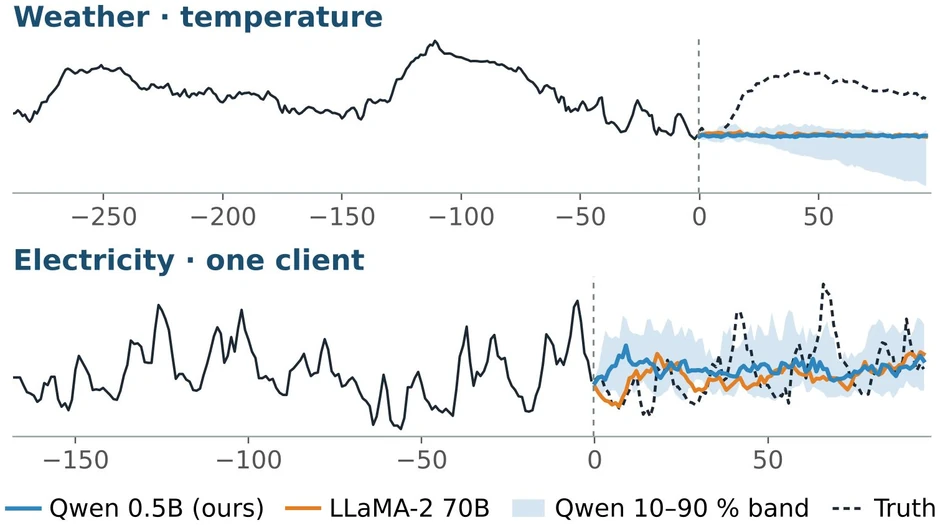
We ran LLMTime with Qwen 0.5B on a CPU, forecasting 96 steps on 21 weather series and 20 electricity series. Repeating the previous day gave lower mean absolute error on both datasets.
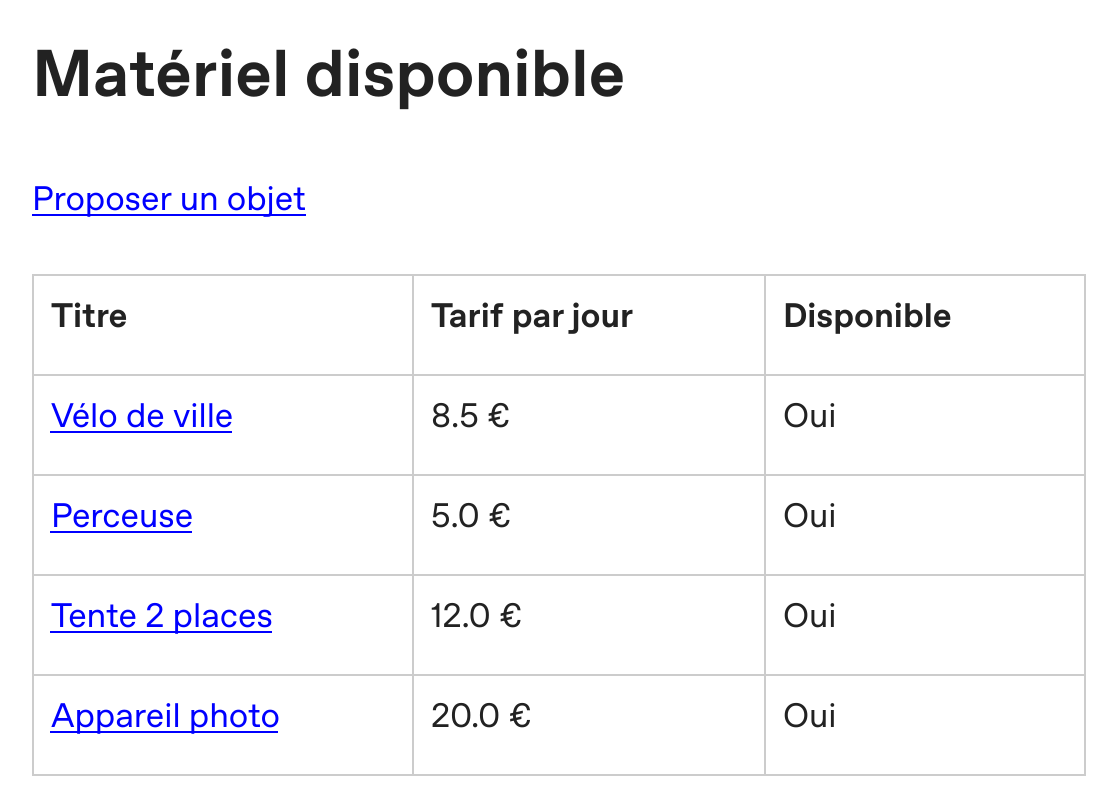
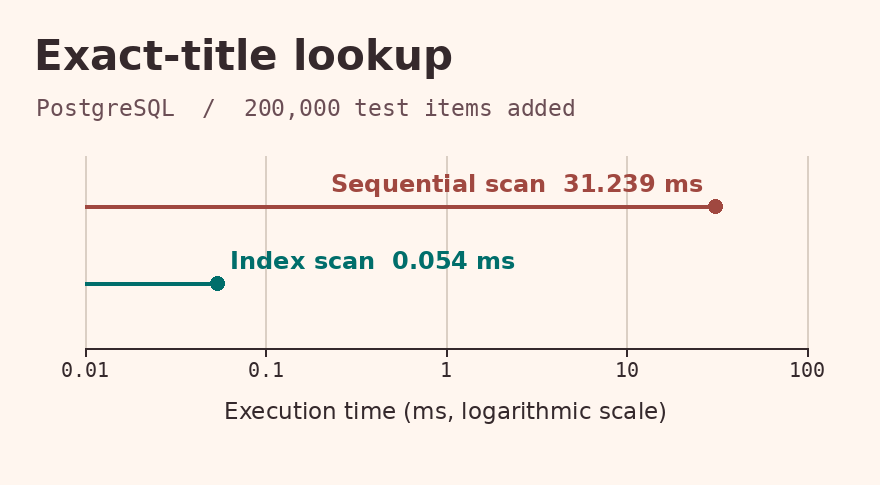
I built an equipment booking app with FastAPI and Jinja, with tests for duplicate cancellations. In a separate PostgreSQL exercise, I measured the same title lookup before and after adding an index. Execution time fell from 31.239 ms to 0.054 ms.
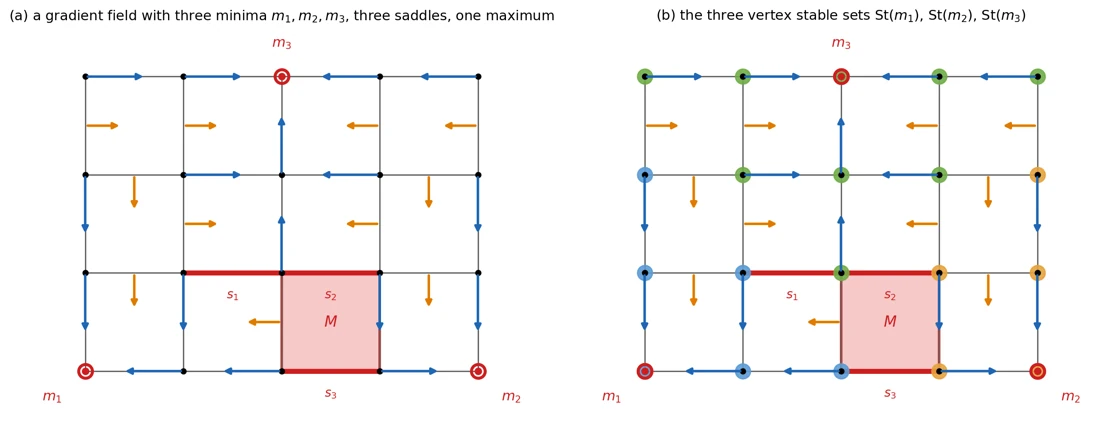
How can we divide a grayscale image into regions around its local minima? At LIGM–CNRS, I proved that a single scan of a Morse sequence labels all the basins. The labels stay consistent at every flooding level, so the segmentation can be read at different grayscale thresholds. Research advisors Laurent Najman, Gilles Bertrand and Jean Cousty
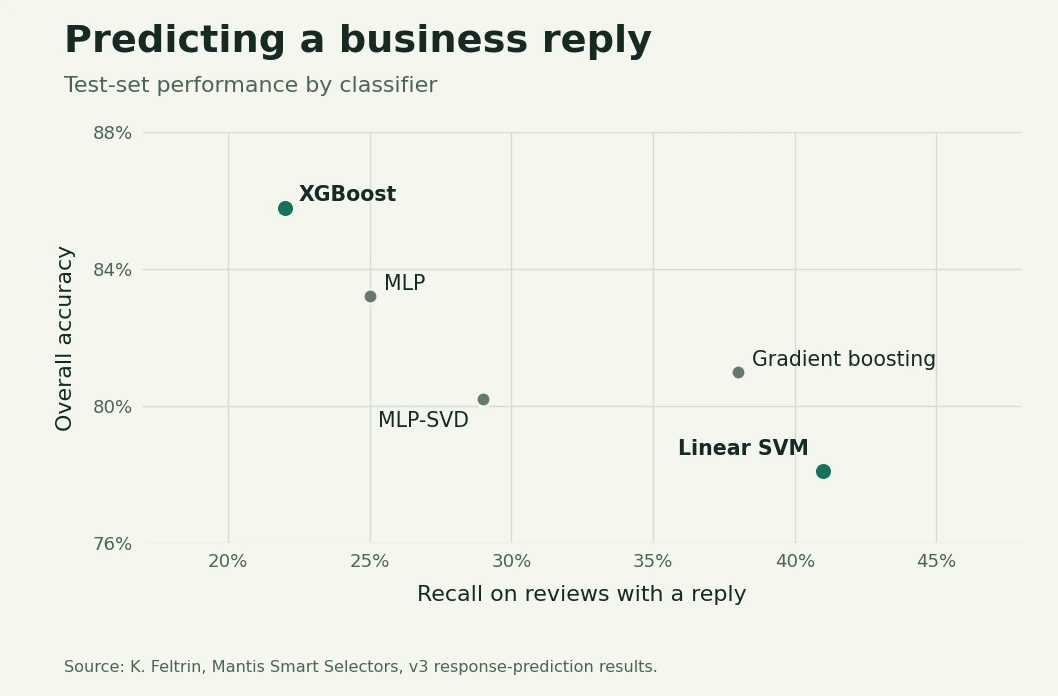
Mantis lets researchers explore related data points on a map. As a Research Intern in the MIT Rising Scholar Program, I built classifiers on 5,154 reviews. In my final benchmark, a linear SVM detected 41% of reviews with a business reply, versus 22% for XGBoost. Research advisor Manolis Kellis
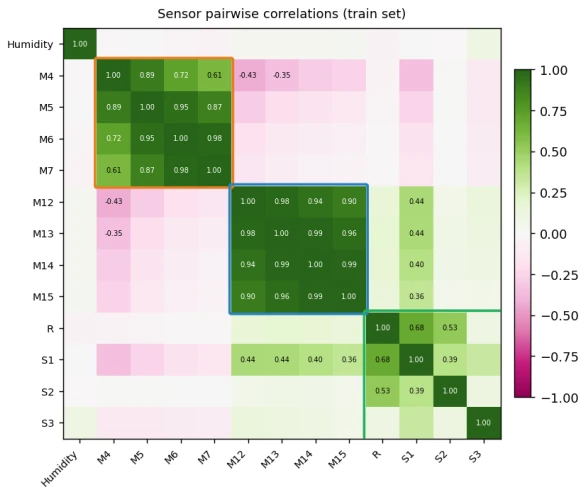
We needed to detect gases at humidity levels rarely seen in training. I designed a validation split around that shift and trained an ExtraTrees model to predict 23 alarm scores. My submission placed 18th of 238. Course instructor Jean-François Bercher
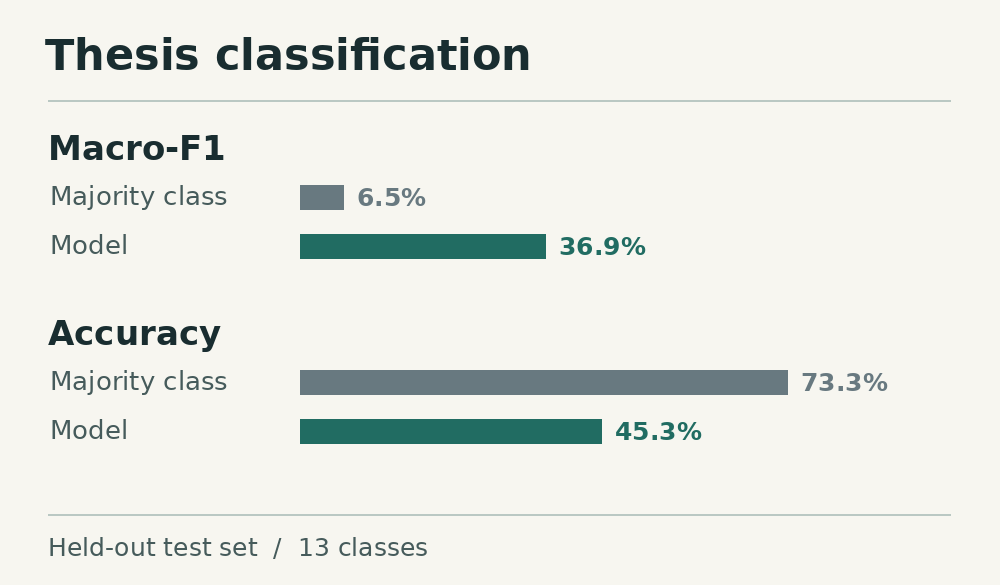
We tried to identify a doctoral thesis’s discipline from its title and description. Always predicting “Other” was right 73% of the time but missed every named discipline. On 51,949 test theses, our classifier improved macro-F1, which weights each class equally, from 0.065 to 0.369.
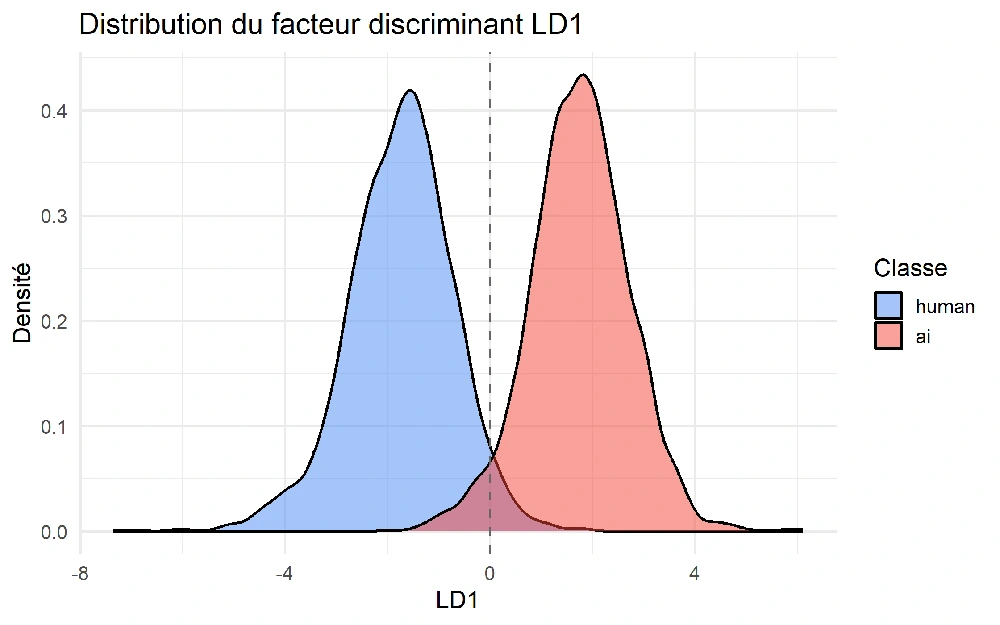
Can word choice and punctuation help distinguish machine-written essays from human ones? We tested two Bayesian classifiers in R on 3,000 essays of each kind. Both averaged about 95% accuracy across five folds on this corpus.
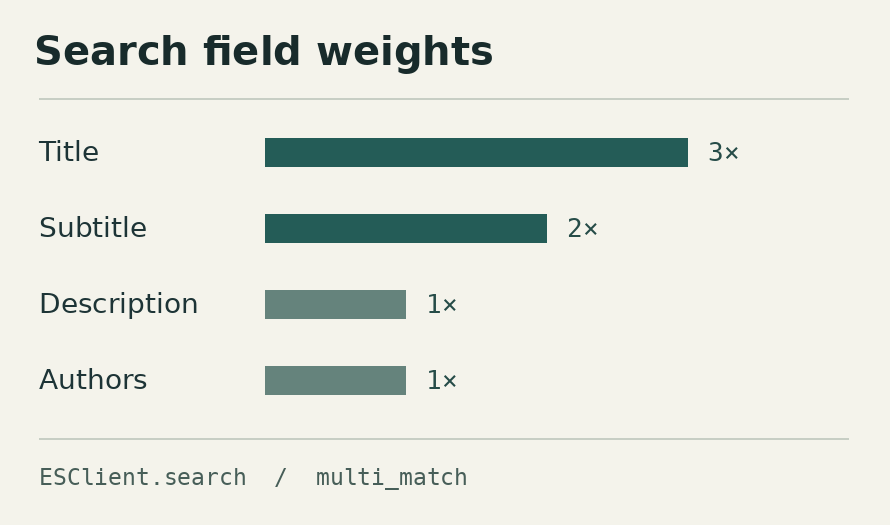
We built a catalogue for finding French academic books. I wrote its search and book-detail pages and fixed the pipelines that populate them. My Elasticsearch query gives a title match three times the weight of a match in the description.
Our team analyzed SoundCloud data for the DevOps Data course at ESIEE Paris. I set up the local Docker Compose environment and tested that requests reached the API through the web server and that the API could connect to the database. Our project earned the highest mark in the class. Project advisor Badr Tajini
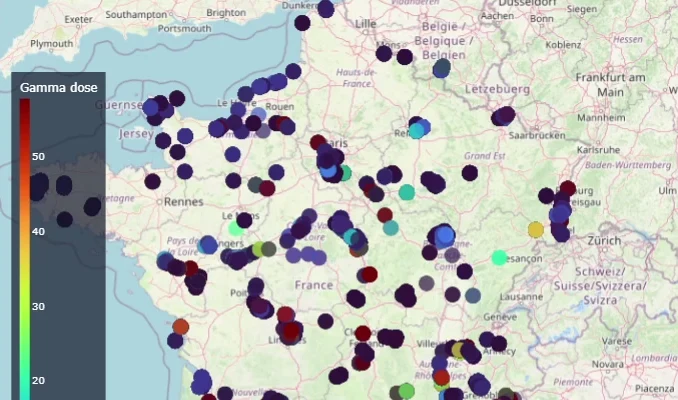
I built the ingestion and cleaning pipeline for a team dashboard. Coordinate conversion and nearest-neighbour joins brought 171,545 measurements across 395 French municipalities together with weather observations.
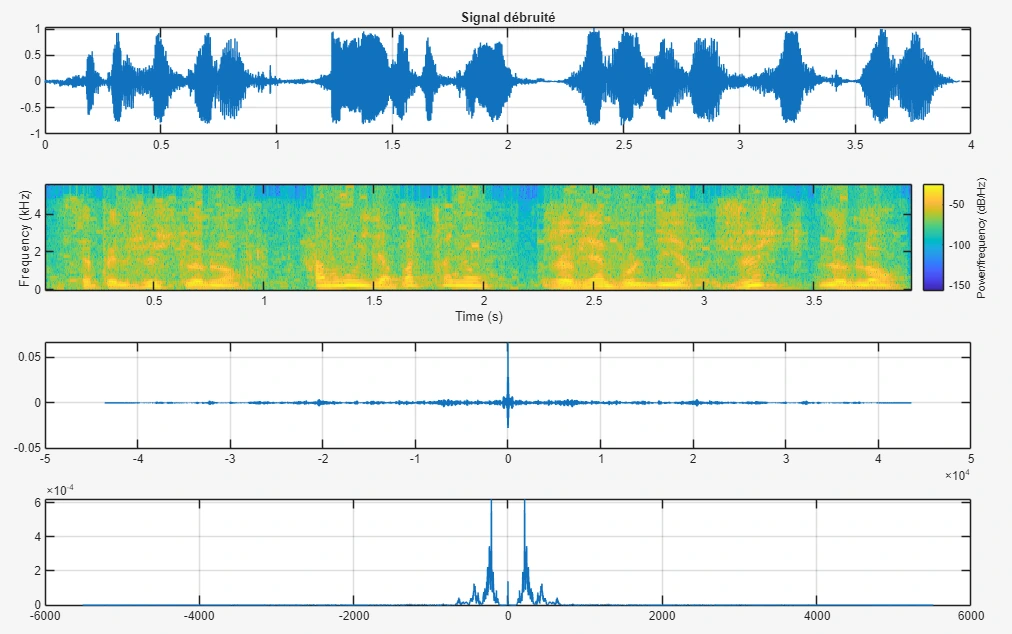
We implemented a first-order Wiener filter in MATLAB. We compared the signals before and after noise cancellation, first on a simulated signal and then on audio.
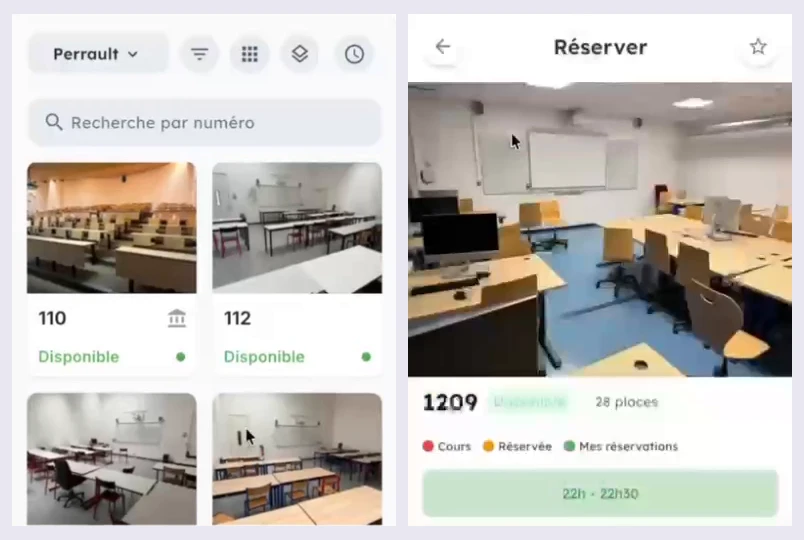
Four of us built a Flutter app to find and book rooms between classes. I designed the Firestore schema and wrote the timetable imports and booking functions. We won the jury’s Coup de Cœur at ESIEE’s Jour des Projets. Project advisor Hassane Mimoun
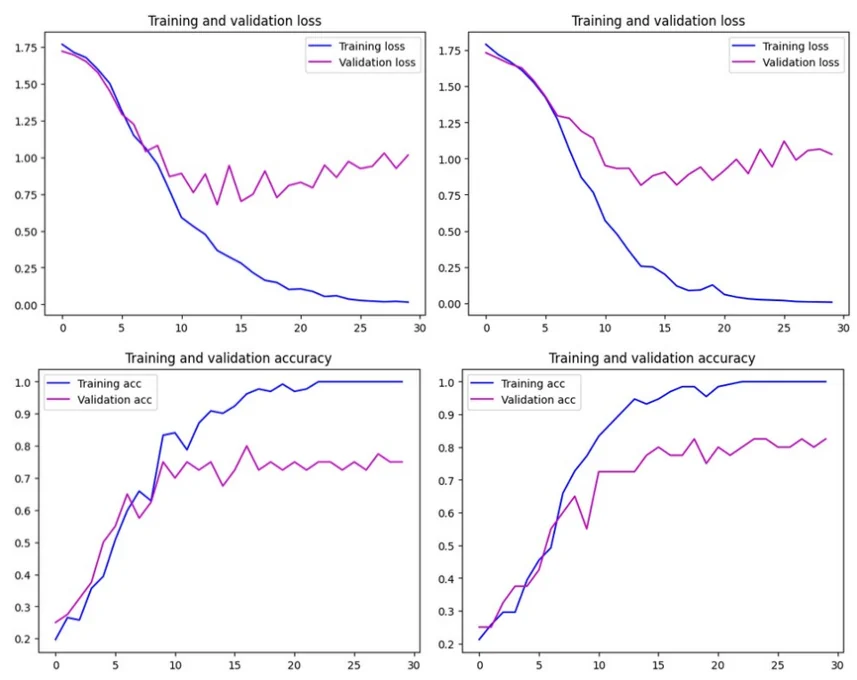
We tested whether aligning faces and encoding them as 128 numbers made it easier to recognize the same person across photos. On our small dataset of film characters, four classifiers reached 97% accuracy. Logistic regression took about 0.4 milliseconds per prediction. Project advisor Laurent Najman
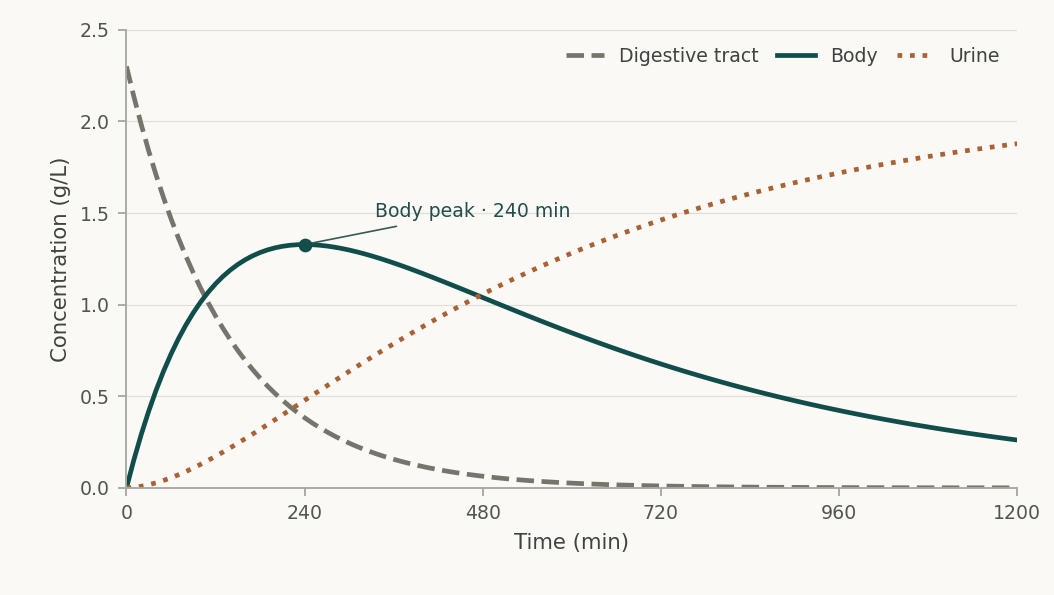
We modeled how a substance moves from the digestive tract into the body and is then eliminated. We computed the concentrations at ten-minute intervals. In the simulation, the body concentration peaked at 1.33 g/L after four hours.
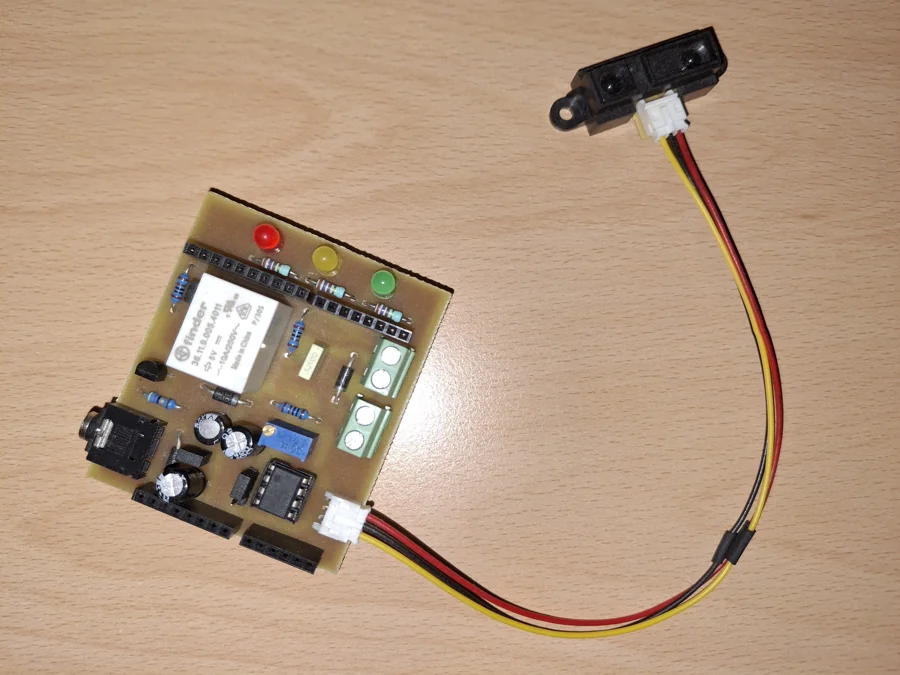
We designed and tested a two-layer parking-assist board. An infrared sensor drives a relay, a speaker and a row of LEDs. We routed the 54 × 63 mm board without vias.
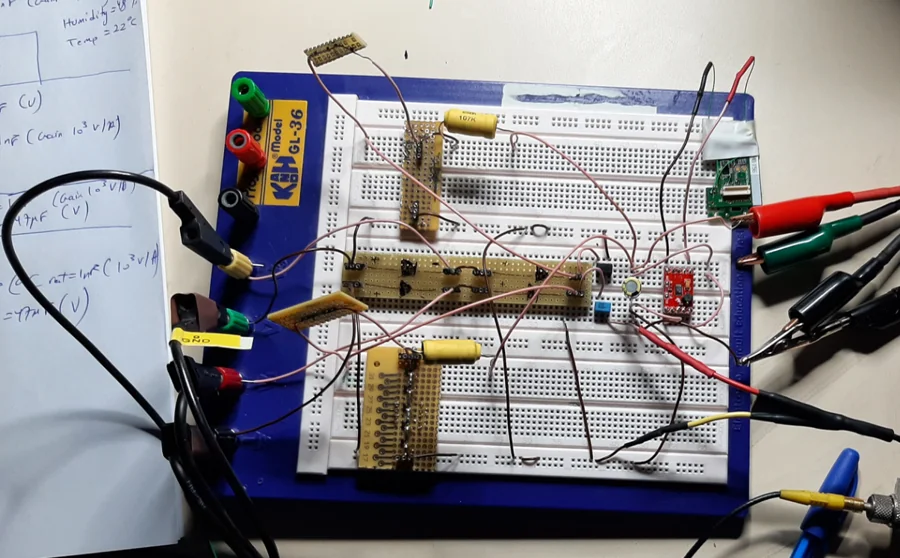
During my ESYCOM research internship, I modeled a power-conditioning circuit in LTspice and tested a prototype for a triboelectric road ramp. The goal was to store enough energy to power a Bluetooth transmission. Internship advisor Philippe Basset
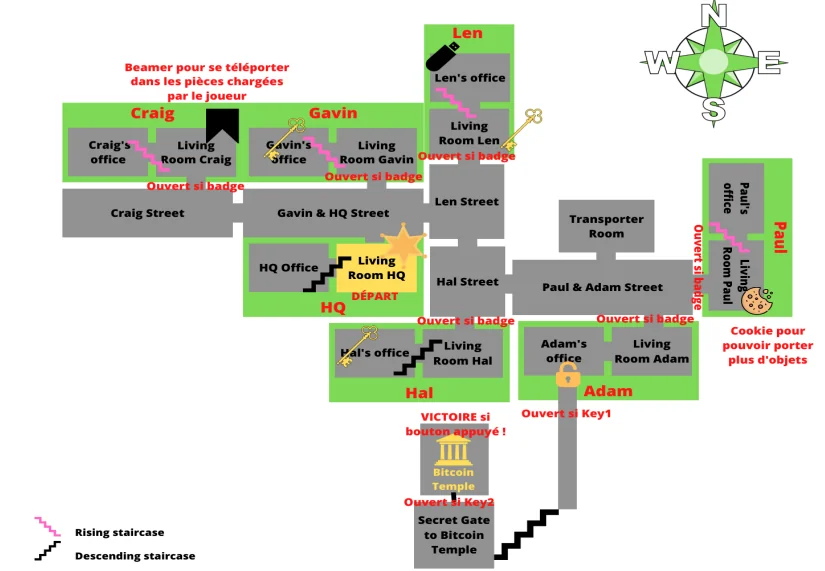
I wrote a Java Swing adventure game with a command parser, inventory and connected rooms. Scripted playthroughs let me test the route from the opening room to the ending.
I co-founded a creator agency and grew its Instagram audience to over 130,000 followers. Brands paid no upfront fee. We earned a share of the creators’ commissions on sales tracked through their referral codes.

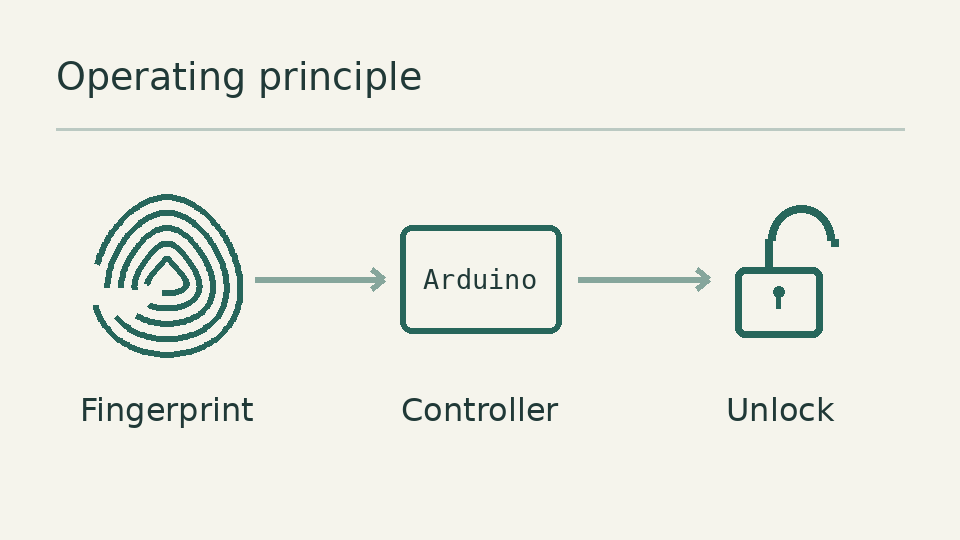
I built an Arduino-based bicycle lock that opens when it recognizes a fingerprint.
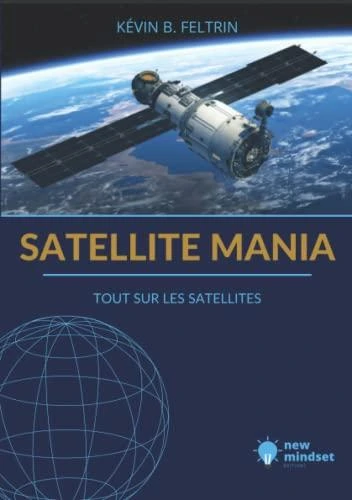
I wrote a French-language introduction to satellites and published it independently. The Kindle edition came out in February 2021, followed by the paperback that December.
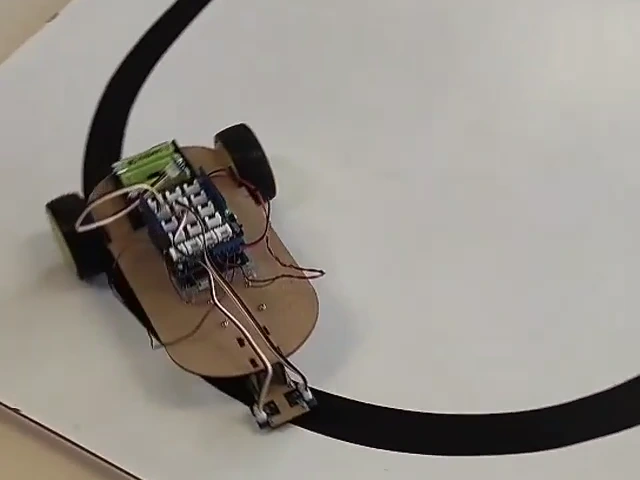
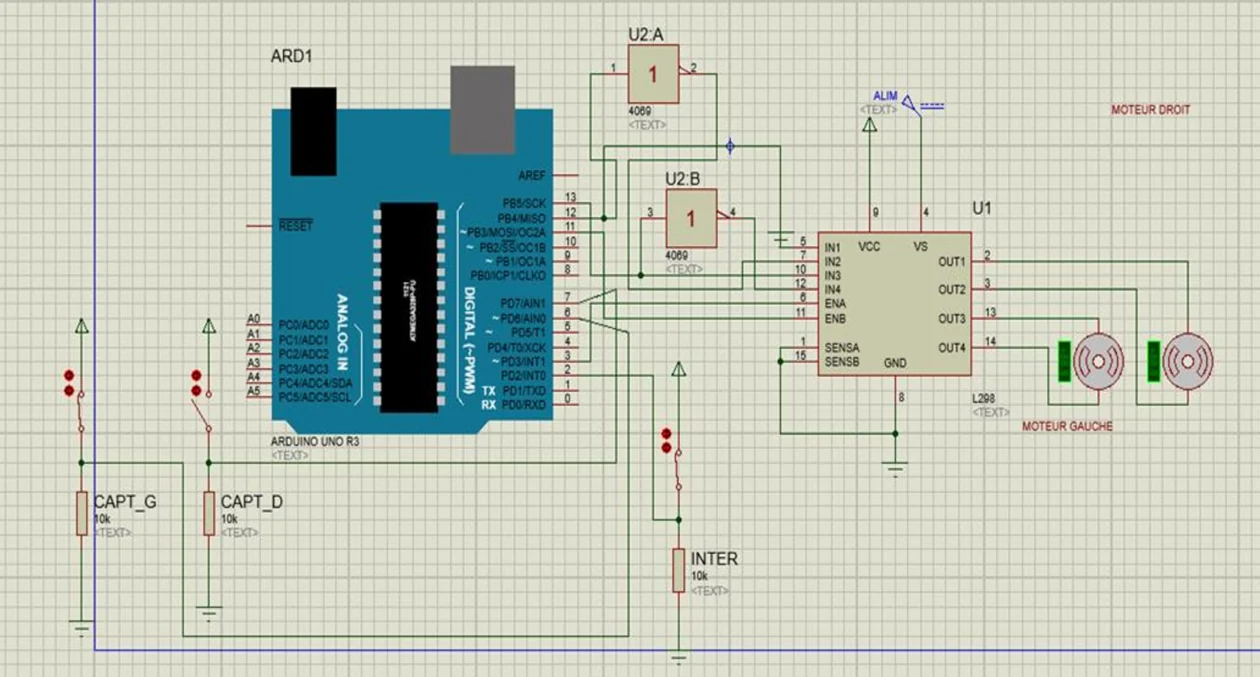
A friend and I built an Arduino robot that follows a black line. Two sensors steer the motors independently. When both sensors lose the line, the robot reverses.